

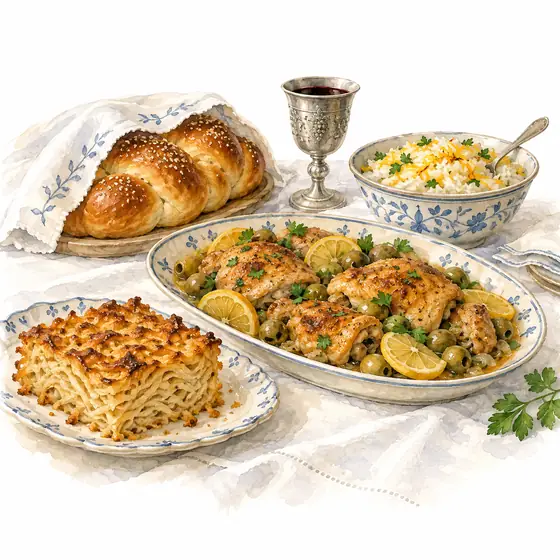

The baby has his name. The family has said its blessings. Now someone lifts the cover from the bread, and the room begins to sound like a family gathering again.
The meal after a brit milah has a name of its own: seudat mitzvah, a festive meal celebrating a religious commandment. It gives everyone time to sit together, bless the new family, and hear the story behind the little boy’s name. There is usually someone insisting you take another spoonful.
Why the meal matters
Sharing a table extends the joy of the covenant beyond the ceremony. Guests may sing, hear a short Torah teaching, give charity, or offer wishes for the baby and his mother. In Chabad gatherings, particular melodies and a teaching about the covenant may be part of the occasion.
A traditional brit meal includes bread, ritual handwashing, and the blessing over bread. Wine is customary, and many communities favor a meat meal. Fish or dairy meals are also served according to community practice. After a bread meal, Birkat Hamazon, the blessing after eating, includes special additions in honor of the brit.
If you would like to follow the ceremony itself, begin with our guide to the brit milah.
What goes on the table?
There is no one dish that every Jewish family must serve. Many North American Ashkenazi families choose a morning spread of bagels, smoked fish, and cream cheese. Others prefer a hot lunch. The family’s background, the hour, and the parents’ energy all have a say.
One distinctive Persian Jewish custom brings a tray of apples to the celebration. The fruit is associated with a traditional story about Jewish mothers giving birth under apple trees in Egypt, and with hopes for children and family continuity. It is a symbolic custom of particular families, rather than a requirement for every brit.
Below are four small home versions inspired by different Jewish kitchens. They are suggestions for a celebratory table, not a list of prescribed brit dishes. Choose one main dish and a side; nobody needs to cook the whole article.
Ashkenazi comfort: a small pot of cholent
Cholent is especially associated with Shabbat lunch: beef, beans, potatoes, and barley becoming something wonderfully soft together. It can suit a hearty celebration, particularly on Shabbat, but it is not a special requirement of the brit meal. This shorter home version uses already-cooked beans.
For 4–6: 750 g stewing beef, cut in chunks; 1 sliced onion; 3 medium potatoes, quartered; ½ cup pearl barley, rinsed; 2 cups cooked white beans, drained; 1 tablespoon oil; 1 teaspoon sweet paprika; 3 cups hot water or beef stock; salt and pepper.
Cook: Heat the oven to 150°C / 300°F. Brown the beef in oil in an ovenproof pot, then soften the onion. Add potatoes, barley, paprika, seasoning, and stock. Add a little more water if needed to just cover. Bring to a simmer, cover tightly, and bake for about 3–4 hours, until the beef is fork-tender. Stir in the beans for the final hour; check that the pot has not become dry.
Serve in small bowls with something crisp alongside. If preparing it for Shabbat, arrange the cooking and warming according to your family’s observance before Shabbat begins.
A Jerusalem favorite: sweet and peppery kugel
Kugel Yerushalmi has a lovely surprise tucked into its caramel-colored noodles: black pepper. Familiar from Jerusalem’s Ashkenazi tables, it makes a useful side because it contains neither milk nor butter and can accompany a meat meal.
For a 20 cm / 8-inch dish: 250 g thin egg noodles; 100 g sugar; 60 ml neutral oil; 3 eggs; ½ teaspoon salt; 1 teaspoon ground black pepper, or less for a gentler version.
Bake: Cook and drain the noodles. In a deep saucepan, heat the sugar and oil over medium-low heat until the sugar melts into a golden caramel; watch closely so it does not burn. Carefully fold it into the warm noodles. Let the mixture cool until just warm, then mix in the beaten eggs, salt, and pepper. Transfer to a greased baking dish and bake at 175°C / 350°F for 50–60 minutes, until browned and set in the center. Rest for 10 minutes before slicing.
A pickle on the side makes a rather good partner for all that sweet, peppery richness.
Moroccan warmth: chicken with lemon and olives
Lemon, olives, and fragrant spices are a familiar combination in Moroccan Jewish cooking. A platter of chicken gives a small celebration a generous centerpiece without needing a long list of dishes.
For 4: 4 large bone-in chicken thighs; 1 sliced onion; 2 chopped garlic cloves; 1 cup pitted green olives, rinsed; ½ teaspoon ground ginger; ¼ teaspoon turmeric; 2 tablespoons olive oil; ¾ cup water; juice of ½ lemon; a handful of chopped coriander or parsley; salt and pepper.
Simmer: Brown the chicken in the oil and lift it onto a plate. Soften the onion in the same pan, then stir in garlic and spices. Return the chicken, add water, and cover. Simmer gently for about 35–45 minutes; add the olives and lemon for the last 15 minutes. Check the thickest part of the chicken reaches 74°C / 165°F, away from the bone. Finish with herbs and adjust the salt after tasting the olives.
Serve with plain rice or couscous to catch the sauce.
Persian-style color: rice with saffron and little jewels
Persian Jewish festive cooking gives rice a place of honor, sometimes with fruit and nuts. This easy absorption-method version borrows that colorful spirit; it does not attempt the separate, crisp crust called tahdig.
For 4–6 as a side: 1½ cups basmati rice; 2¼ cups water; a small pinch of saffron soaked in 2 tablespoons hot water; 1 small grated carrot; 3 tablespoons raisins; 3 tablespoons slivered almonds; 2 tablespoons neutral oil; ¾ teaspoon salt, or to taste.
Steam: Rinse the rice and drain well. Soften the carrot in 1 tablespoon oil in a saucepan. Add rice, measured water, salt, and saffron with its soaking liquid. Bring to a boil, cover, and cook over very low heat for about 15 minutes, or until the water is absorbed. Leave covered off the heat for 10 minutes. In a small pan, warm the raisins and almonds in the remaining oil for 1–2 minutes, then scatter them over the fluffed rice.
The almonds are optional. Leave them out if someone at the table has a nut allergy.
A generous table can still be a simple one
For a meat menu, try the chicken, rice, a green salad, and bread, keeping dairy off the table. The kugel can replace the rice. A pot of cholent can be the main event on its own, with bread and a few vegetables.
Let someone other than the recovering mother organize the food. Keep hot dishes hot and cold dishes cold, and refrigerate leftovers promptly. The most memorable part may be the story told over lunch, rather than the number of serving bowls.
A small keepsake for the parents after a very special day:
© Sarel Jewelry. All rights reserved. Please share this article by linking to the original page on sareljewelry.com. Copying or republishing our original text without prior written permission is prohibited, except as permitted by law.