

Pidyon HaBen: A Firstborn Son, Silver Coins, and Family Joy

A month into life, and already the guest of honor. At a pidyon haben, a tiny baby can bring a whole room of people together.
There may be a gleaming silver tray, borrowed gold jewelry, and plenty of proud smiles. At the heart of it is a short Jewish ceremony called the redemption of the firstborn son.
What is pidyon haben?
The father gives a kohen, a member of the Jewish priestly lineage descended from Aaron, the traditional redemption payment, commonly presented as five silver coins.
In Jewish tradition, this recalls the special status of firstborn sons and the transfer of sacred service to the tribe of Levi. The father and kohen exchange traditional words, blessings are recited, and the payment is given. A festive meal brings family and friends together. Read an introduction to the ceremony and its background.
Which babies have this ceremony?
It usually takes place on the 31st day of a qualifying boy’s life, with scheduling adjustments for Shabbat and certain holidays.
Being a family’s first boy is not enough. The traditional rules concern the mother’s firstborn child, a vaginal birth, and the parents’ kohen or Levite lineage. An older daughter, a Caesarean birth, or certain family backgrounds can mean no pidyon haben is required.
Previous pregnancy loss can also affect the answer. A rabbi should confirm the family’s circumstances and date privately. This guide explains who is obligated.
The silver tray and all that gold
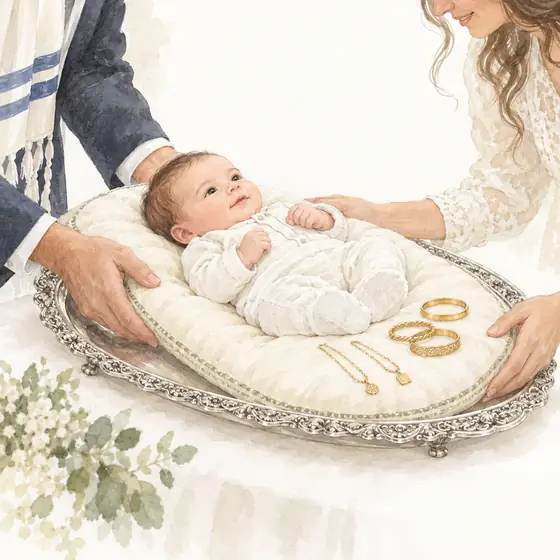
In some families, the baby is presented on a special silver tray or platter with a cushion. Relatives lend gold jewelry to adorn the baby for the ceremony. Suddenly, the smallest person in the room has quite an impressive collection.
This custom adds beauty and honor to the mitzvah, the religious commandment. One traditional explanation connects the women’s jewelry with the story of the Golden Calf: jewelry is now willingly offered for a sacred purpose. Mivtza Taharas Hamishpacha describes this interpretation and the women’s participation.
The jewelry is lent for the occasion and returned afterward. It is separate from the five silver coins given to the kohen. The decorated tray is a custom, rather than a requirement for every ceremony.
One mitzvah, different family customs
There are Ashkenazi and Sephardic versions of the ceremony’s words. In the Sephardic text presented by Chabad, the mother also answers a question confirming the baby’s firstborn status.
Timing customs differ, too: some Sephardic families hold it on the evening beginning the 31st day, while many Ashkenazi families hold it during the day. The family’s rabbi helps set the time. See a brief guide to these customs.
Some hosts share small packets of sugar and garlic, which can flavor food shared with others. Songs, the menu, and the size of the gathering vary. The baby, meanwhile, is under no obligation to stay awake for the speeches.
For the earlier celebrations and the story behind a baby’s name, read our guide to Jewish birth and naming traditions.
A keepsake for a parent, or to put away for the boy’s future:
© Sarel Jewelry. All rights reserved. Please share this article by linking to the original page on sareljewelry.com. Copying or republishing our original text without prior written permission is prohibited, except as permitted by law.