

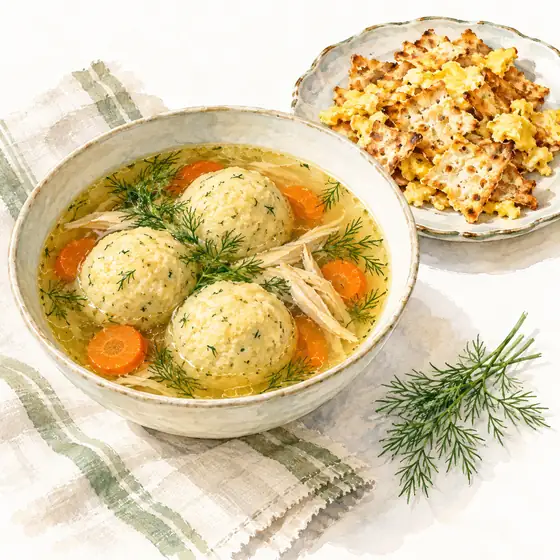

Kneidlach and Matzah Brei: Two Names, Two Different Dishes
A bowl of kneidlach and a pan of matzah brei begin with similar ingredients, but arrive at the table in very different forms. Kneidlach are dumplings; teiglach are honey-cooked dough sweets. Matzah brei is another dish again: softened matzah cooked with eggs.
Kneidlach (קניידלעך, dumplings) is a broad Yiddish name. This recipe is specifically for matzah-meal dumplings. Matzah brei (מצה בריי) uses broken matzah rather than a formed dumpling dough.
Matzah-meal kneidlach
Contains wheat and eggs · About 8 dumplings
You need: 2 lightly beaten eggs; 2 tablespoons oil or chicken fat; 2 tablespoons water or stock; ½ US cup matzah meal; 1 teaspoon salt; a wide pot of simmering water or broth.
- Combine eggs, fat, water and salt. Stir in the matzah meal gradually and refrigerate, covered, for 20 minutes.
- With damp hands, make about eight small balls. Lower into a wide pot of gently bubbling liquid, leaving space for expansion.
- Cook for about 30 minutes. Check that the centre is cooked through; serve in hot broth. Using water and oil keeps the dumplings pareve; chicken fat or stock makes them meat.
Matzah brei with eggs
Dairy with butter; pareve with suitable fat · Contains wheat and eggs · 2–4 servings
You need: 3 matzah sheets; 3 eggs, separated; salt and pepper; butter or a suitable pareve cooking fat to grease the pan.
- Break matzah into medium pieces. Soften in warm water, drain and squeeze out the water.
- Mix with the beaten yolks. Whisk whites until foamy and fold them into the matzah. Season.
- Grease a frying pan and cook the mixture until lightly browned and the egg is fully set throughout. Serve immediately. This version is savoury. If serving alongside chicken broth or another meat dish, use pareve fat for the matzah brei.
On Passover, use appropriately certified ingredients and follow your family’s practice concerning gebrokts, matzah that has become wet. Not every family eats these dishes during the holiday.
Prepare food before Shabbat and follow your household’s serving and warming practices. Use suitable kosher ingredients, keep meat and dairy separate, and refrigerate perishable food within two hours. Cooking times are approximate; check doneness.
© Sarel Jewelry. All rights reserved. Please share this article by linking to the original page on sareljewelry.com. Copying or republishing our original text without prior written permission is prohibited, except as permitted by law.