


The Taste I Remember: My Grandmother’s Jewish Kitchen in Belarus
I come from Belarus. When I think about the food of my childhood, I think about what my grandmother cooked. The names come back with the flavours: teiglach, tzimmes, forshmak. Some are familiar far beyond our family. Others need a little explanation before an English-speaking guest knows what is on the plate.
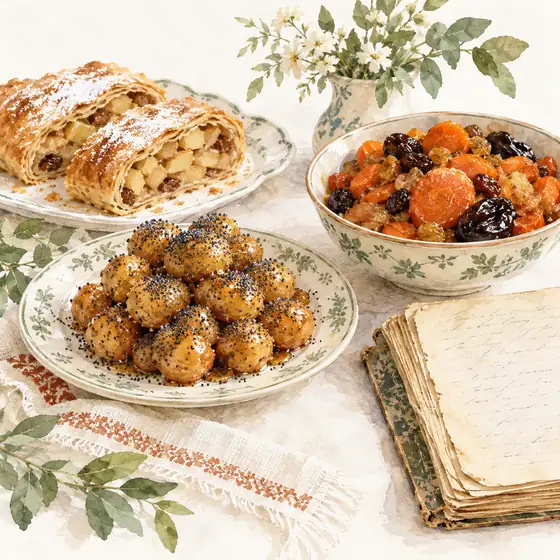
My favourites included the little pieces of dough cooked in honey and finished with poppy seeds: teiglach. There was also the chicken dish we called belyk, made from white chicken meat cooked in onion skins. I want to keep that family name, even while we continue looking for a written recipe that matches it.
The dishes I remember
- Belyk: our family’s name for that onion-skin-cooked white chicken meat.
- Teiglach: small pieces of dough cooked in honey, with poppy seeds.
- The stuffed neck we called kishka: chicken-neck skin filled with flour and fried onion, cooked for the broth. The more specific Yiddish name for a stuffed neck is helzel.
- Falshe fish: “false fish,” another name from my grandmother’s table. Documented recipes include chicken versions; that does not by itself establish her exact mixture.
- Kolduny: potato pancakes with a meat filling.
- Potatoes and meat from the oven: a slowly cooked dish I remember alongside the world of cholent.
- Tzimmes: carrot rounds with raisins and prunes, cooked with butter. In our family it was not reserved for Rosh Hashanah; it appeared on Shabbat too.
- Rice with raisins and forshmak, the chopped-herring dish.
- Apple strudel: one of the foods I associate with the autumn holidays.
- The poppy-seed, honey and ginger sweet I remember as imberlach, and another poppy-seed sweet associated in my memory with Passover.
- A wheat, nut, dried-fruit and honey dish: I remember the ingredients and the wish for a good year, but not its name.
One kitchen, more than one occasion
These foods did not all belong to one meal. A Shabbat dish, an autumn holiday pastry and a Passover sweet each had their own place. Keeping that distinction matters as much as keeping a familiar name.
The pages that follow bring together these memories and recipes found under their traditional names. Where a published recipe differs from what I remember, the difference stays visible. A family story does not need to be made more certain than it is.
For me, this is where Ashkenazi food begins: with a grandmother, a remembered dish and the wish to pass its name on.
© Sarel Jewelry. All rights reserved. Please share this article by linking to the original page on sareljewelry.com. Copying or republishing our original text without prior written permission is prohibited, except as permitted by law.