

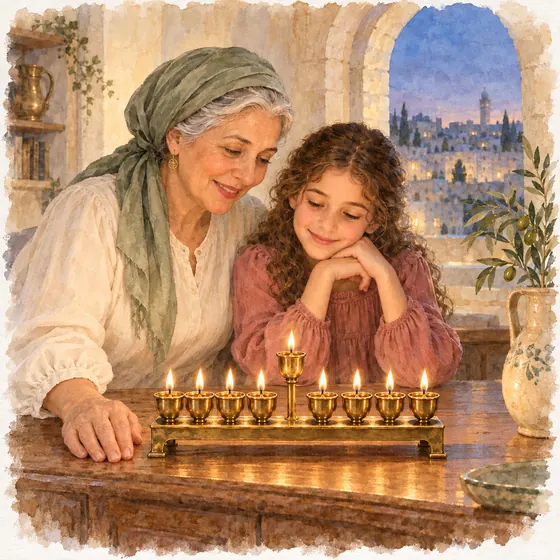

A row of small oil cups. A silver backplate covered in flowers. A block of stone with hollows cut into its surface. All can belong to the story of the Hanukkah lamp.
A hanukkiah (חנוכייה, a lamp for Hanukkah) does not have to look like the branched candleholder many of us know. Its changing shapes offer a small window into Jewish life across different places and centuries.
A holiday remembered in light
Hanukkah (חנוכה, “dedication”) recalls the rededication of the Temple in Jerusalem after the Maccabean revolt in the second century BCE.
In the account preserved in the Talmud, a small supply of ritually pure oil, enough for one day, lasted for eight. This religious tradition lies at the heart of the holiday’s lights.
Oil cups, flowers and stone
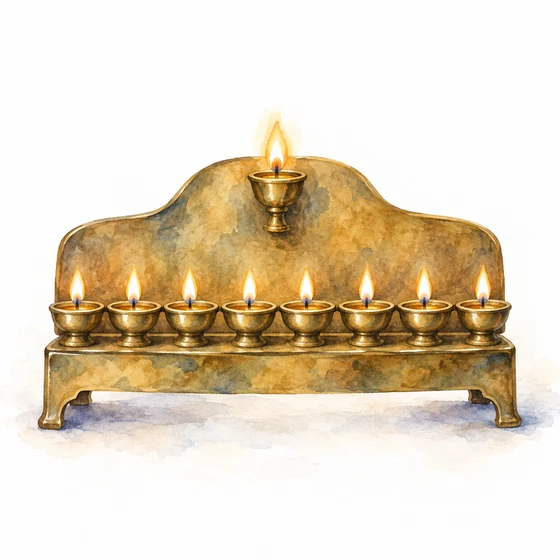
Many surviving Hanukkah lamps were made for oil and wicks. A low row of containers could sit in front of a decorated backplate. There was no need for tall branches.
The Jewish Museum in New York holds an Italian copper-alloy lamp catalogued as sixteenth century. Along its upper edge are little battlements, rather like the top of a fortified building. A familiar architectural detail became part of an object used for a Jewish holiday.
A silver lamp from late-seventeenth-century Hamburg, now at The Metropolitan Museum of Art, has large tulips across its backplate. The flowers reflect a wider European taste for tulip decoration at the time.
Stone lamps are also known from Yemen and Morocco. Their carved oil wells show how different materials could serve the same purpose. They are one part of each region’s story, not a style shared by every household.
Look a little closer
When you see an old lamp, look first at where the oil or candles would go. Then notice the metalwork, carving or flowers. These details can tell us about the maker’s skills and the visual world around them.
The object may be unfamiliar at first. Find the places for the lights, though, and the connection to Hanukkah becomes clear. Across all those different forms, the holiday remains recognizable.
© Sarel Jewelry. All rights reserved. Please share this article by linking to the original page on sareljewelry.com. Copying or republishing our original text without prior written permission is prohibited, except as permitted by law.