


The wedding is still ahead. The family, however, has already found a reason to dance.
At a Jewish henna night, a little paste can carry a lot of feeling: affection, family memories, and hopes for the couple’s life together. There may be embroidered clothes and a crowded dance floor. There may also be a small gathering at home.
Either way, this is a lovely moment to ask, “How does your family do it?”
First, what is a Jewish henna night?
Henna is a plant-based dye used to color the skin temporarily. Henna celebrations belong to the wedding traditions of some Jewish communities, including families with roots in Morocco and Yemen. Neighboring non-Jewish communities have their own henna traditions, too.
These are community and family customs, rather than a requirement for every Jewish wedding. A celebration is often held before the wedding, though the timing and format vary.
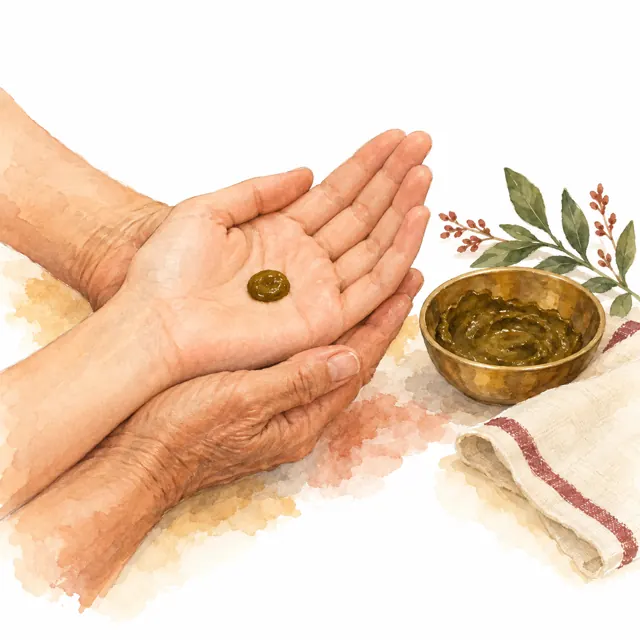
The paste may be placed on the bride’s hands, the groom’s hands, or guests’ hands, depending on the family. It need not be an elaborate design. A simple mark can be the center of the occasion. My Jewish Learning introduces the custom and its place in Jewish wedding celebrations.
In Moroccan families: clothes with a story
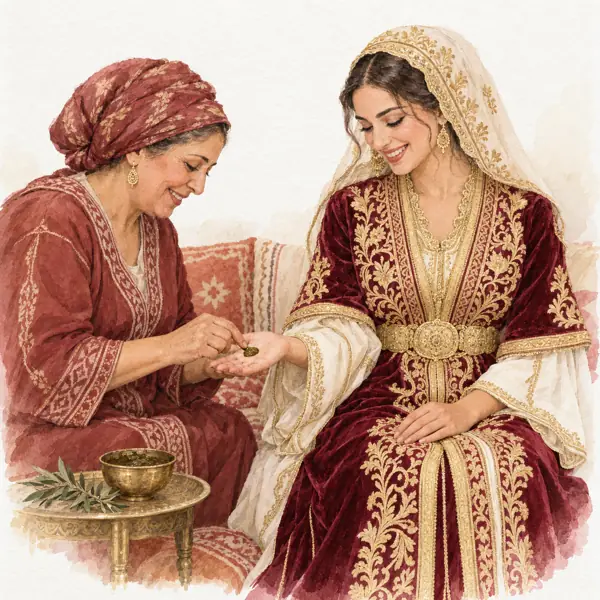
At some Moroccan Jewish celebrations, richly decorated clothing is part of the pleasure. But a beautiful garment can hold more than a good photo opportunity.
In a family-history project shared by ANU Museum, Nessya Tamir traced her family’s henna dress back to Meknes, Morocco, in 1920. Her account follows it to Israel in 1956 and eventually to the Israel Museum in Jerusalem. Along the way, women in the family repaired it and cared for it.
That is one family’s story, rather than a rule about what every bride wears. Still, it offers a wonderful question for the evening: “Does this outfit have a story?” You may discover an entire family album behind the answer. Read Nessya’s account of the family henna dress.
In Yemenite families: more than one tradition
“Yemenite henna” covers a rich variety of local customs. Henna researcher Noam Sienna describes striking differences between communities in Yemen, from simple applications to much longer bridal preparations.
In Sana’a, historical bridal henna preparations could take several days. Habbani traditions included a palm pattern with a ring and a central dot. There was no single design shared by everyone.
Modern celebrations have changed, too. Sienna describes the simple circular application used in many contemporary Yemenite Jewish celebrations in Israel. A family’s henna night today can honor its roots while looking quite different from a celebration generations ago. Explore Sienna’s research on Yemenite Jewish henna traditions.
A little henna, a lot of good wishes
Different communities have connected henna with protection, good fortune, and hopes for children. These are traditional beliefs and meanings, not promises about what the paste will do.
There is room for change in the party itself. Harif’s account of contemporary henna events describes celebrations at home and in larger venues, with some once-separate bridal and groom’s ceremonies now brought together. Its description offers a glimpse of how henna celebrations continue to evolve.
Your invitation has arrived. Now what?
Start with the hosts. Ask about dress, timing, and anything they would like guests to know. There is no need to buy a traditional outfit unless they have invited you to wear one.
If henna is offered, ask what the family usually does before holding out your hand. Joining in should feel comfortable; you can enjoy the evening without having henna applied.
Ask before photographing a close family moment. And if someone explains a song or an heirloom, give them your attention. Those little conversations may become your favorite part of the night.
One useful phrase to bring along is “Mazal tov!” As for the dancing, enthusiasm is a perfectly good place to start.
Curious about the wedding itself? Visit our guide to Jewish wedding traditions around the world. For the delicious side of family celebrations, explore Jewish wedding and festive food.
A little color to carry the celebration home:
© Sarel Jewelry. All rights reserved. Please share this article by linking to the original page on sareljewelry.com. Copying or republishing our original text without prior written permission is prohibited, except as permitted by law.