


Jewish wedding food comes with a very pleasant problem: deciding what to try first. The rice sparkles with fruit and nuts. A crisp pastry hides a savory filling. And someone has made enough sweets to keep the conversation going well past dessert.
In our tour of Jewish wedding traditions, we visited the celebrations. Now let’s pull up a chair.
This table brings together wedding dishes and festive foods from six Jewish communities. There is no single menu for every family. Some dishes have a clear wedding connection; others belong to the wider celebration kitchen.
The mini-recipes below are our simplified home versions, inspired by these food traditions. They are not exact family recipes and have not yet been kitchen-tested. Each makes about four small servings unless noted.
Persian Jewish wedding food: rice dressed for the occasion
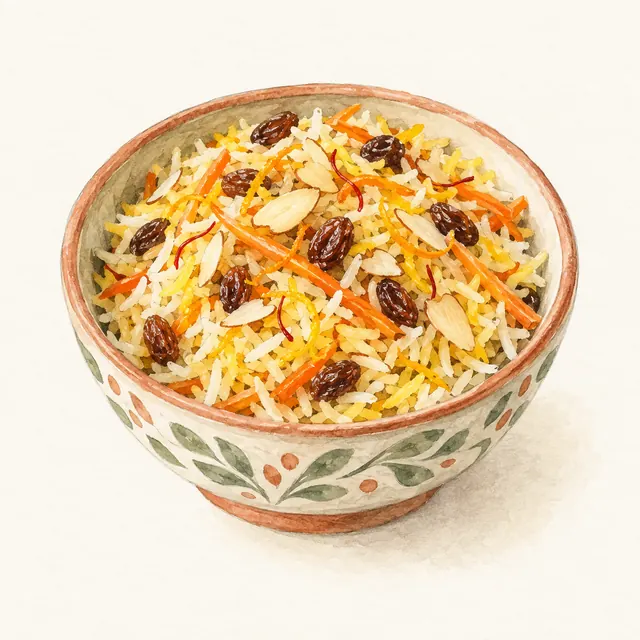
Persian rice knows how to make an entrance. Shirin polo, a sweet rice dish, is widely associated with Persian weddings. In Jewish families it also appears at other celebrations. Fruit, nuts, and saffron bring color to the plate. See Persian cook Hami Sharafi’s shirin polo for a full version.
Think of our shortcut as a weeknight guest wearing a party scarf. It borrows the flavors, without trying to recreate the whole layered rice tradition.
Try it: festive rice with orange and nuts. You need 200 g basmati rice, 1 carrot cut into fine strips, 40 g raisins, 30 g sliced almonds, 2 tablespoons neutral oil, 1 teaspoon finely grated orange zest, a pinch of saffron soaked in 2 tablespoons hot water, and salt.
First, cook the rice according to its packet. Meanwhile, soften the carrot in the oil for 6–8 minutes. Add the raisins, almonds, and zest, then stir for 1 minute. Fold into the hot rice with the saffron water. Taste and season. Allow about 30 minutes.
Moroccan Jewish weddings: a pastry with a surprise

Pastilla, also called b’stilla, brings sweet and savory flavors together in crisp pastry. Food writer Marlena Spieler describes it as a dish especially enjoyed at Moroccan Jewish wedding feasts. Older versions use pigeon; chicken is a practical choice for home cooks.
Our small parcels skip the complex filling of a full pastilla. They keep the lovely contrast of chicken, almonds, and cinnamon. Dessert has not arrived early. It just looks a little like it.
Try it: chicken-and-almond pastry parcels. You need 250 g fully cooked shredded chicken, 1 chopped onion, 30 g chopped almonds, ½ teaspoon cinnamon, ¼ teaspoon ground ginger, 4 large filo sheets, 3 tablespoons oil, salt, and pepper.
Heat 1 tablespoon oil and soften the onion for 8–10 minutes. Mix with the chicken, almonds, spices, and seasoning. Cool the filling. Brush each filo sheet with a little oil, fold it in half, add a quarter of the filling, and fold into a parcel. Bake at 190°C for 20–25 minutes, until crisp and piping hot. Use dairy-free filo for a meat meal.
Ashkenazi weddings: a golden bowl of welcome

An ethnographic account of Ashkenazi food records a traditional wedding meal with fish, golden chicken soup, meat, and pastries. In that account, saffron helped give the soup its festive color.
Menus change, but a bowl of good soup still makes a warm welcome. It also asks very little of your dancing shoes.
Try it: a quick golden chicken soup. You need 1 litre chicken stock, 2 sliced carrots, 1 sliced celery stalk, 150 g fully cooked shredded chicken, a small pinch of saffron, 60 g fine egg noodles, and a little chopped dill.
Bring the stock, carrots, celery, and saffron to a simmer. Cook for about 15 minutes, until the vegetables are tender. Add the chicken and noodles. Simmer for the noodle packet’s cooking time, making sure the chicken is piping hot. Finish with dill and season to taste. This is a shortcut using prepared stock, rather than a long-simmered wedding broth.
Sephardi celebrations: a little almond sweetness

For this stop, we are visiting the Sephardi tradition of Rhodes. It is one part of a much wider world of Sephardi food. The Rhodes Jewish Museum documents masapan, or marzipan, at engagements and weddings.
Cookbook author Stella Hanan Cohen also shares her community’s masapan tradition and recipe. Making the sweets together can be part of the celebration itself.
Try it: quick almond bites. For about 12 small pieces, mix 100 g finely ground blanched almonds with 70 g icing sugar. Add ¼ teaspoon food-grade orange blossom water, then plain water 1 teaspoon at a time, just until the mixture holds together.
Knead briefly and shape into small balls or diamonds. Chill for 30 minutes. This no-cook shortcut differs from traditional cooked-syrup masapan. The flavoring should be gentle: start small, taste, and add more only if needed.
Georgian Jewish weddings: a generous table

A historical ethnographic study of Georgian Jews lists wedding foods including fish, boiled chicken, rice with turkey, and grilled poultry or meat. It describes a particular historical setting, rather than every Georgian Jewish wedding today.
For our home version, turkey and rice make a simple starting point. This is an inspired small meal, not a reconstruction of the study’s wedding recipe.
Try it: turkey rice with herbs. You need 200 g long-grain rice, 250 g fully cooked diced turkey, 1 chopped onion, 2 tablespoons oil, 2 tablespoons chopped parsley, salt, and pepper.
Cook the rice according to its packet. Meanwhile, soften the onion in the oil for 8 minutes. Add the turkey and 3 tablespoons water. Cover and heat gently until piping hot. Fold into the rice, add parsley, and season. Allow about 30 minutes. It leaves you time to enjoy your own party.
Mountain Jewish festive food: a place for plov
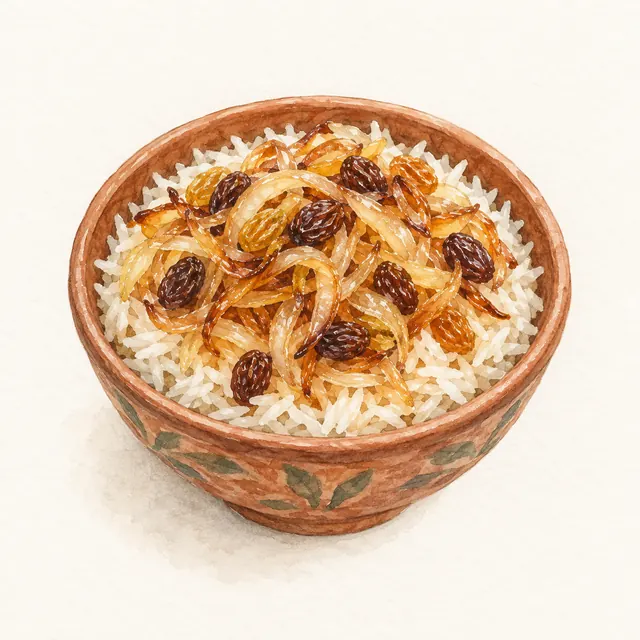
Mountain Jews have their own food traditions. They should not be confused with Georgian or Bukharian Jews. In a firsthand visit to a Mountain Jewish home in Azerbaijan, food writer Caroline Eden describes plov flavored with raisins.
That gives us a glimpse of the community’s cooking. However, it does not establish a single wedding recipe. So this final dish is a festive addition to our table, rather than a claim about what every Mountain Jewish wedding serves.
Try it: rice with raisins and onions. You need 200 g long-grain rice, 1 large sliced onion, 60 g raisins, 2 tablespoons oil, and salt. Cook the rice according to its packet. Meanwhile, cook the onion gently in the oil for 12–15 minutes, until soft and golden.
Add the raisins and 3 tablespoons water. Cover and cook for 3 minutes. Spoon over the hot rice and season to taste. This is a simple side inspired by the flavors in Eden’s account, rather than a traditional plov method.
Your invitation to keep tasting
A wedding menu can carry family history in a very practical form: someone remembers the soup, someone brings the sweets, and someone insists the rice needs a little more time.
You do not need to cook six dishes at once. Choose one, invite a few people, and ask what their families serve at a celebration. That may be the start of the best story at the table.
Which dish would you try first?
For a kosher meal, use ingredients and supervision appropriate to your practice and keep meat and dairy separate. These recipes use no dairy. Several contain nuts; the pastries and noodles may contain wheat and eggs.
Food illustrations created with AI to accompany the simplified home recipes.
For a keepsake beyond the shared table:
© Sarel Jewelry. All rights reserved. Please share this article by linking to the original page on sareljewelry.com. Copying or republishing our original text without prior written permission is prohibited, except as permitted by law.